
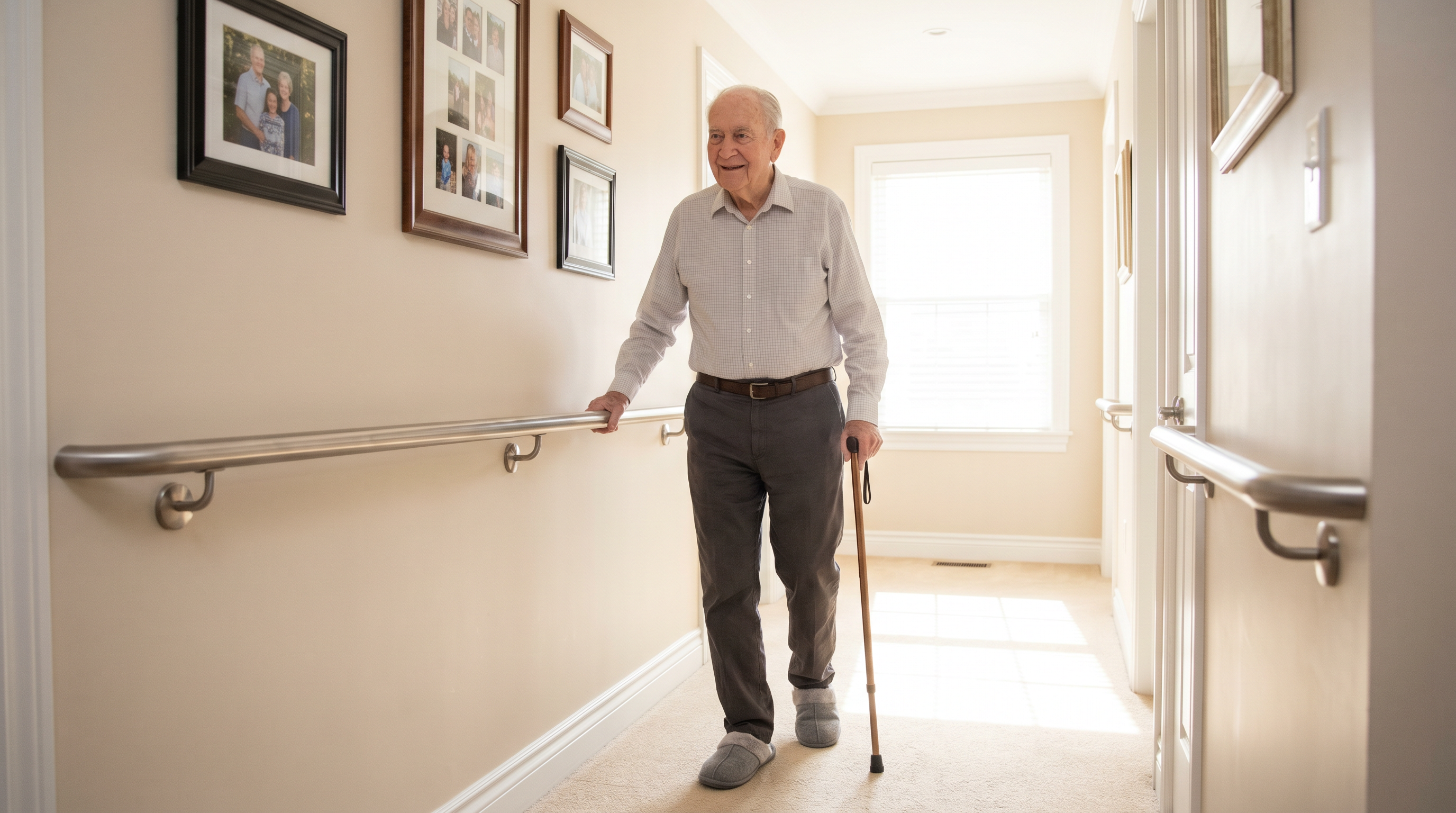
Falls are the leading cause of injury among older adults — but most are preventable. Here are 10 practical steps you can take today to make your loved one's home safer.
Why Fall Prevention Matters
According to the CDC, one in four Americans aged 65 and older falls each year. Falls are the leading cause of both fatal and non-fatal injuries in older adults — and the fear of falling can itself become a problem, causing seniors to limit their activity and become more isolated.
The good news: most falls are preventable. Simple changes to the home environment, combined with the right support, can dramatically reduce the risk.
10 Fall Prevention Tips
1. Remove Trip Hazards
Walk through the home and remove loose rugs, electrical cords crossing walkways, and clutter on the floor. These are among the most common causes of falls at home.
2. Improve Lighting
Many falls happen at night when seniors get up in the dark. Install nightlights in hallways, bathrooms, and bedrooms. Make sure all stairways are well-lit with accessible light switches at both top and bottom.
3. Install Grab Bars
Grab bars in the bathroom — next to the toilet and in the shower or tub — provide critical support. They should be professionally installed into wall studs to ensure they can bear weight.
4. Use a Non-Slip Bath Mat
Wet bathroom floors are a major fall hazard. Use non-slip mats inside and outside the tub or shower, and consider a shower chair or bench for added stability.
5. Secure Stairways
Make sure handrails are present on both sides of all staircases and are firmly attached. Consider whether a first-floor bedroom might be safer for a loved one who struggles with stairs.
6. Review Medications
Many medications — including blood pressure medications, sleep aids, and some antidepressants — can cause dizziness or affect balance. Ask the prescribing physician to review all medications for fall risk.
7. Encourage Regular Exercise
Strength and balance exercises — like tai chi, yoga, or simple chair exercises — have been shown to significantly reduce fall risk. Even a short daily walk helps maintain the muscle strength needed for stability.
8. Check Vision and Hearing
Poor vision and hearing loss both increase fall risk. Make sure your loved one has regular eye exams and that their glasses prescription is current. Address hearing loss with appropriate devices.
9. Wear Proper Footwear
Encourage your loved one to wear supportive, non-slip shoes or slippers at all times — even indoors. Avoid loose slippers, socks without grip, or going barefoot on hard floors.
10. Consider In-Home Support
A trained caregiver can provide mobility assistance, help with transfers (getting in and out of bed, chairs, and vehicles), and be present during higher-risk activities like bathing. Having consistent support at home is one of the most effective fall prevention strategies available.
We're Here to Help
At Divine Living Home Care, mobility and fall prevention is one of our core services. Our caregivers are trained to assist with safe movement and to identify and address fall hazards in the home. Call us at 781-919-0151 to learn more.